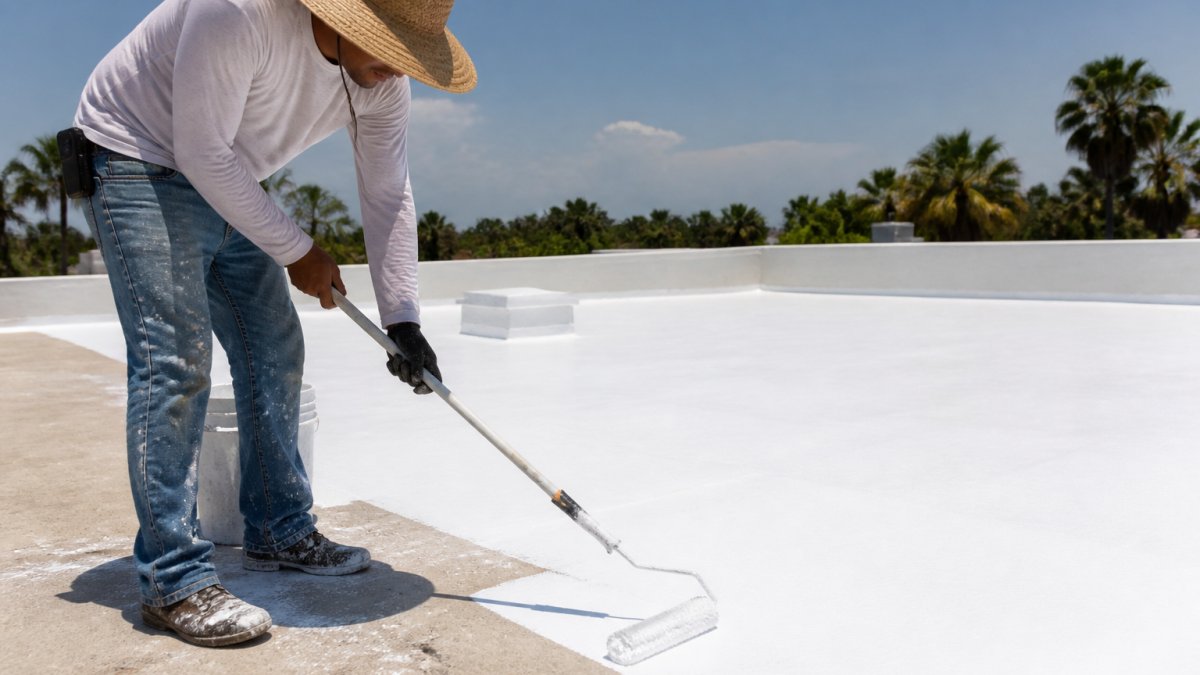
 how-to
Does Roof Coating Stop Roof Leaks? What to Know First
Last Updated: October 25, 2026
Quick Summary
Roof coating can stop minor leaks and slow water intrusion, but it will not fix a failing roof. It may seal small cracks and help prevent future leaks, yet it will not stop major leaks. Coating is a waterproof barrier over a sound roof, not a repair for structural damage or active major leaks.
- Coatings may stop minor leaks, but the roof should be repaired and dry before application.
- Find the actual leak source first, because water travels and the stain rarely sits under the hole.
- Silicone coatings bond well to built-up roofing, modified bitumen, EPDM, and metal.
- Asphalt shingle roofs are the weakest fit because shingles shed water rather than hold a film.
- Roof coating lasts roughly 5 to 15 years depending on coating type, surface, prep quality, and weather exposure.
Table of Contents
- Does Roof Coating Stop Roof Leaks?
- How to Seal a Leaking Roof: A Step-by-Step Workflow
- Roof Coating for Leaks: Which Roof Types and Materials Qualify
- Temporary Repair vs. Permanent Repair vs. Replacement
- How Long Does Roof Coating Last?
- Roof Coating Drying Time Before Rain
- Pros and Cons of Roof Coating for Leak Prevention
- Schedule a Roof Inspection Before You Coat
- Frequently Asked Questions
Does Roof Coating Stop Roof Leaks?
Roof coating can stop minor leaks and slow water intrusion, but it will not fix a failing roof. According to Angi's roof coating guidance, coating may seal small cracks and help prevent future leaks, yet it will not stop major leaks.
Roof coating is a waterproof barrier applied over a sound roof surface to seal minor cracks and extend service life. It is not a repair for structural damage, rot, or active major leaks.
What Coating Can and Cannot Fix
What a coating can do:
- Seal hairline cracks and small surface fissures
- Close seams and fastener points on metal roofs
- Stop minor leaks caused by surface wear
What a coating cannot do:
- Repair rotten decking or saturated insulation
- Fix a leak with an unknown root cause
- Correct ponding water caused by bad drainage or slope
The Roof Coatings Manufacturers Association FAQ is direct about this: coatings may stop minor leaks, but the roof should be repaired and dry before application. Coating over a wet roof traps moisture and makes the problem worse.
How to Seal a Leaking Roof: A Step-by-Step Workflow
Sealing a leaking roof is a diagnostic job before it is a coating job.
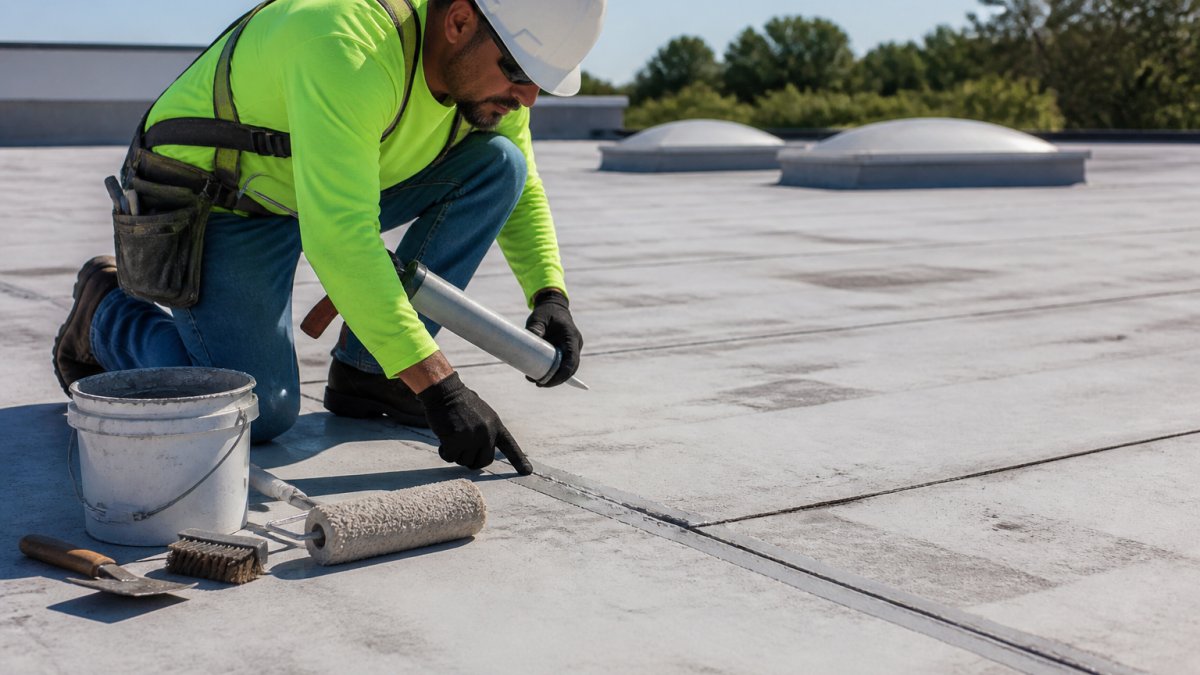
- Inspect the full roof surface. Check seams, penetrations, flashings, and drains.
- Find the actual leak source. Water travels. The stain inside rarely sits under the hole.
- Check the deck and insulation. Probe for soft spots and saturation.
- Repair the root cause. Patch, replace, or re-flash before any coating goes down.
- Clean and prep the surface. Power washing removes dirt, chalk, and old coating.
- Let it dry completely. Moisture under a coating ruins adhesion.
- Apply the coating in spec. Follow the product's coverage and thickness.
- Verify and monitor. Recheck after the first rain and inspect yearly.
Find the Leak Source Before You Coat
The most common mistake is coating the stain instead of the source.
Start at the highest point and work down, checking penetrations, valleys, and edges around vents and chimneys. On flat roofs, check drains and low spots first.
Not sure whether your issue is minor or serious? Our guide to the signs your roof needs attention now helps you judge the damage before committing to a coating.
If you cannot find the source, stop. Coating a roof with an unidentified leak is a wasted application.
Roof Coating for Leaks: Which Roof Types and Materials Qualify
Not every roof takes a coating well. Compatibility depends on the roof membrane and the coating chemistry; get either wrong and the film fails within a season.
Match the coating chemistry to the roof membrane
The main families:
- Silicone coatings bond well to built-up roofing, modified bitumen, EPDM, and metal. They resist ponding water and stay flexible across temperature swings, which is why they dominate flat-roof restoration. They generally do not accept acrylic topcoats and can be slippery when wet, so check walkway requirements.
- Acrylic coatings work on asphalt-based surfaces, modified bitumen, and some metal, and they offer good reflectivity at lower cost. They are water-based, so they re-emulsify if rain hits before full cure and they can chalk over time. They are a poor match over silicone or over fresh asphalt bleed-out.
- Polyurethane coatings offer toughness and chemical resistance on metal and concrete but are moisture-sensitive during application and often cost more per square.
A common pattern is buying a silicone product for an asphalt shingle roof because the label says "roof coating." Shingles shed water rather than hold a film, so the coating cracks at the granule interface.
Roof-type compatibility at a glance
Flat and low-slope roofs: The strongest fit.
Metal roofs: A strong fit when rust is caught early.
Tile roofs: Coatings work on the tile field, but broken or slipped tiles need resetting first.
Asphalt shingle roofs: The weakest fit. Shingles shed water rather than hold a film.
Concrete and modified bitumen: Generally good candidates when clean, dry, and primed per the manufacturer's instructions.
The compatibility checks to run before you buy
- Identify the existing membrane. Check seams, fasteners, and any manufacturer stamp. If you cannot identify it, treat compatibility as unknown.
- Read the product data sheet, not the marketing label. It lists approved substrates, primer requirements, coverage rate, and cure window.
- Run a test patch. Apply a small area, cure per the data sheet, and check adhesion and peel before committing.
- Check for existing coatings. A new coating over an unknown or incompatible old coating is a common blister source; strip or prime per the manufacturer's instructions.
- Confirm warranty terms. Many warranties require an approved applicator and specific prep, and may be voided by coating over a wet or incompatible substrate.
Temporary Repair vs. Permanent Repair vs. Replacement
These options solve different problems, and picking the wrong one is the most expensive mistake.
Permanent repair fixes the root cause, flashing replacement, panel repair, or seam work, the right call for an isolated failure on an otherwise sound roof.
Replacement is for roofs past their service life or with widespread damage.
A coating sits between repair and replacement: a long-term performance layer over a structurally sound roof.
A transparent decision framework
Work through these criteria in order. Stop at the first one that fails.
- Is the deck and insulation sound? Probe for soft spots and saturation. If the deck is rotten or insulation is saturated, coating and patch work will fail; the wet material has to come out first.
- Is the leak source identified? If water is entering at an unknown point, no option is safe to price. Diagnose first.
- Is the damage isolated or widespread? One failed flashing or seam on an otherwise sound roof points to permanent repair; widespread field cracking, granule loss, or multiple active leaks point toward replacement.
- How much service life is left? A roof in its last quarter rarely justifies a full coating system; a roof with most of its life left and minor surface wear is a strong coating candidate.
- What is the drainage and slope condition? Ponding water from bad slope or clogged drains is a root-cause problem. Coating can handle ponding only when the system is specified for it and drainage is corrected.
Cost factors that drive the decision
Pricing varies by region, roof size, access, and product, but the factors that move the number are consistent:
- Roof area and access. Square footage drives material and labor; height, parapets, and equipment staging add cost.
- Surface preparation. Power washing, priming, and rust treatment can rival the coating cost on a dirty or oxidized roof.
- Coating chemistry and thickness. Silicone and high-solids systems cost more per square than thin acrylics but last longer, so compare cost per year of service life, not cost per bucket.
A practical rule: if the coating quote approaches a large fraction of a replacement quote and the roof is near end of life, replacement usually wins on cost per year. If the roof is sound and damage is surface-level, coating usually wins.
| Option | Best For | Expected Outcome | Main Cost Drivers |
|---|---|---|---|
| Temporary repair | Active leak, storm coming, roof too wet to coat | Weeks to months of protection | Patch materials, labor, urgency |
| Permanent repair | Isolated failure, sound roof | Fixes the root cause | Flashing and seam materials, access |
| Coating | Sound roof, minor surface leaks | Years of added service life | Area, prep, chemistry, thickness, warranty |
| Replacement | Widespread damage, end of life | Full new roofing system | Tear-off, disposal, deck repair, new materials |
Weighing the cost of restoring a sound roof against a tear-off? Read our breakdown of why restoring your roof beats replacing it for the full case.
How Long Does Roof Coating Last?
Roof coating lasts roughly 5 to 15 years depending on coating type, surface, prep quality, and weather exposure. Silicone systems on flat roofs trend longer; thin acrylic films on shingle roofs trend shorter.
Three factors drive the range:
- Coating type. Silicone and high-solids elastomerics outlast thin acrylics.
- Surface preparation. A clean, dry, properly primed surface is the difference between years and months.
- Exposure. Heavy sun, ponding water, and foot traffic wear a coating faster.
Thickness matters too: a coating applied below the manufacturer's specified coverage protects nothing.
Roof Coating Drying Time Before Rain
Most roof coatings need 4 to 24 hours of dry weather before rain, depending on the product. Silicone skins over faster but needs more time to fully set; water-based acrylics can re-emulsify if rain hits before they cure.
Check the forecast before you schedule: a single rain event during curing can wash a fresh coating and force a redo. Cold surfaces slow curing, high humidity extends it, and wind-blown debris contaminates a wet film.
Pros and Cons of Roof Coating for Leak Prevention
Coating is not a universal win. Here is the honest ledger.
Pros:
- Seals minor leaks and cracks across the roof surface
- Extends roof life by years when applied to a sound roof
- Costs a fraction of a full replacement
Cons:
- Will not fix major leaks or underlying damage
- Fails on wet, dirty, or incompatible surfaces
- Shorter service life on shingle roofs than on flat or metal
The reflective benefit is real; our guide to how reflective coatings cut cooling costs explains the energy side.
Here is the part most guides skip: coating is a maintenance decision, not a repair decision. Treat it as preventive care and it pays off. Treat it as a fix for a broken roof and it disappoints.
Schedule a Roof Inspection Before You Coat
The only way to know whether coating will stop your leak is a proper roof inspection.
We inspect the full roofing system, find the leak source, and tell you honestly whether a coating will hold or whether you need repair or replacement.
You can see the coating and restoration services we offer for flat, metal, tile, and asphalt shingle roofs. When you are ready, get in touch with our team to schedule an inspection.
A coating is only as good as the diagnosis behind it.
We have spent over 15 years restoring roofs across Florida, and we apply eco-friendly, VOC-free coatings backed by 10, 15, and 20-year warranty options.
Frequently Asked Questions
Can you apply roof coating over a leaking roof?
You can, but you should not expect it to fix the leak. The Roof Coatings Manufacturers Association advises repairing and drying the roof before applying any coating. A roof coating applied over trapped moisture or an active leak can trap water, blister, and peel. If the leak comes from a failed seam, flashing, or fastener, fix that first, then coat the repaired surface. Coating over an unresolved leak wastes money and shortens the coating's service life.
What are the disadvantages of roof coatings?
Roof coating will not fix structural damage, widespread ponding, or a roof at the end of its service life. It needs a clean, dry, sound surface to adhere properly, so power washing and surface preparation add time and cost. Weather matters too: rain during curing can ruin the application. Some contractors argue coatings mask problems instead of solving them, which is why a proper roof inspection and leak diagnosis should come before any coating decision.
How long does roof coating need to dry before rain?
Drying time depends on the coating type, thickness, temperature, and humidity. Most coatings need a rain-free window of several hours to a full day before they are rain-resistant, and silicone coatings typically cure faster in warm, dry conditions. Check the manufacturer's data sheet for the specific product, and avoid applying when rain is forecast within the cure window. Cool, humid weather extends drying time significantly.
Should you repair a roof leak before applying a coating?
Yes. Repair and dry the roof first, then coat. Coating over an active leak traps moisture and prevents proper adhesion. The practical order is: find the leak source, repair seams, flashing, and fasteners, confirm the area is dry, then apply the coating as a waterproof barrier. Skipping the repair step is the most common reason coatings fail early and the reason some contractors refuse to apply them to leaking roofs.
