 how-to
Fix Ponding Water on Flat Roofs: A Step-by-Step Guide
Last Updated: October 30, 2026
Quick Summary
Ponding water on a flat roof is usually caused by blocked drains, scuppers, or downspouts, or by a sagging low spot that stops water from draining. Clear the outlets first, then check whether puddles still last beyond 48 hours. If they do, the roof needs added slope, a new drain, or a professional repair to fix the ponding water flat roof problem.
- Puddles lasting more than 48 hours after rain signal a real drainage problem.
- Clear leaves, grit, and debris from drains, scuppers, and downspouts first.
- Never walk a wet, icy, or steep roof, and avoid working on one alone.
- Repair TPO and PVC membranes by welding, not gluing, since peel-and-stick patches are temporary.
- Call a professional if you see sagging, deep ponding, or water stains inside.
Table of Contents
- Why Ponding Water Forms and When It Becomes a Problem
- Inspect the Roof and Identify the Source
- How to Remove Standing Water from a Flat Roof
- Repair Methods by Roof Type and When to Replace Instead
- Booking a Professional Assessment for Your Flat Roof
- Frequently Asked Questions
Standing water on a flat roof is more than an eyesore. When water sits for days after rain, it wears down the membrane, finds seams, and can start leaks that stain ceilings and rot the deck below. If you are dealing with ponding water on a flat roof, the good news is that most cases follow a clear pattern, and you can often fix them without a full tear-off.
Why Ponding Water Forms and When It Becomes a Problem
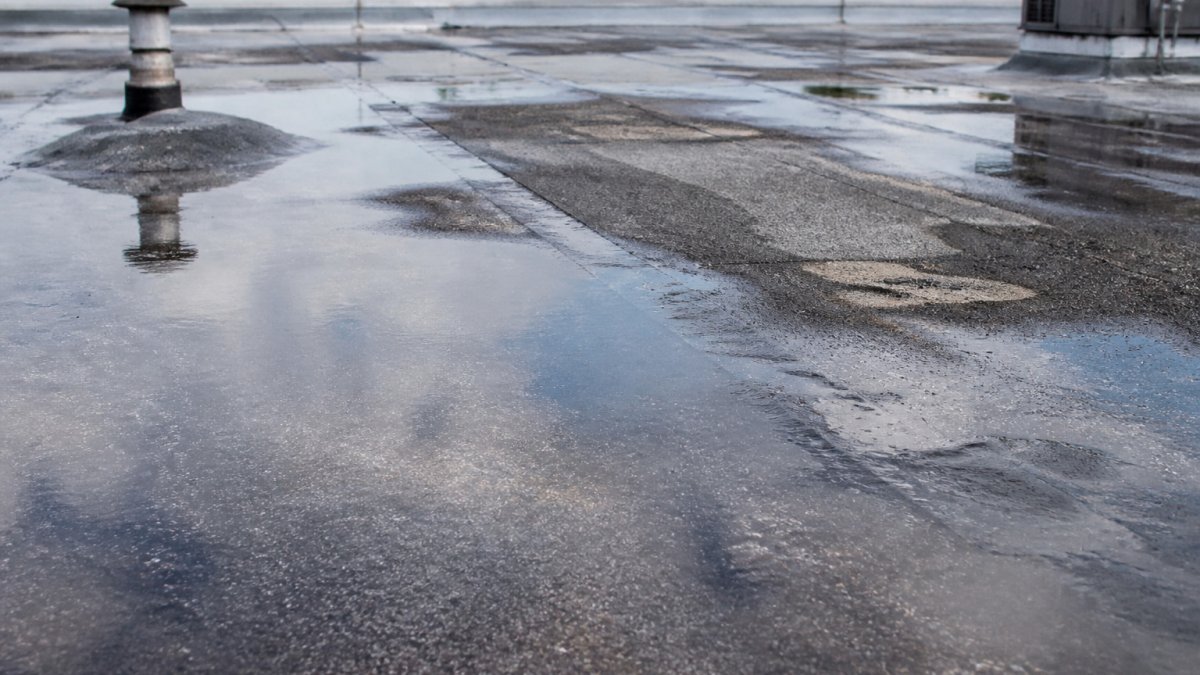
Ponding water is water that stays on a roof for more than a short time after rain stops. Flat roofs are built with a slight slope so water runs toward drains.
A little standing water after a storm is normal. The real problem starts when puddles last several days, grow deeper over time, or leave a dirty ring behind as they dry.
Inadequate slope and roof deflection
Many flat roofs are not as flat as they look. Over the years, the roof deck can sag under weight, age, or poor original construction. This creates a low spot where water gathers.
- Look for dips you can see from a distance
- Check for puddles that return in the same spot after every rain
- Notice soft or spongy areas when you walk the roof
Blocked drains, scuppers, and downspouts
The most common cause of ponding is a blocked outlet. Leaves, grit, bird nests, and roofing debris clog drains and scuppers. Once the outlet is blocked, water has nowhere to go.
Downspouts that are bent, crushed, or disconnected can also keep water from leaving the roof. Even a clear drain does no good if the pipe below it is blocked.
Inspect the Roof and Identify the Source
Before you fix anything, find out why the water is there. A simple inspection saves time and money, and it tells you whether you are dealing with a blocked outlet, a sagging deck, or a membrane problem. If you are unsure which applies, you can review early warning signs that your roof needs attention.
Start with a safe diagnostic sequence
Work on a dry, mild day. Never walk a wet, icy, or steep roof, and never access a roof alone on a commercial building. Follow this order so you rule out the cheap fixes before you consider structural work:
- Check the outlets first. From a ladder or safe vantage point, look at every drain, scupper, and downspout. If water is standing but the outlet is clear, the problem is slope or deflection, not drainage. If the outlet is blocked, clearing it may solve the ponding entirely.
- Measure the puddle. Note the depth and the footprint. A common rule of thumb is that water deeper than about 1 inch, or any puddle that persists more than 48 hours after rain stops, signals a real drainage problem rather than normal surface wetting. Shallow film that dries within a day is usually not a defect.
- Map where puddles return. Puddles that reform in the same spot after every rain point to a low spot. Puddles that move or spread point to a blocked or undersized outlet.
- Walk the membrane only if it is dry and safe. Look for cracks, blisters, bare spots, lifted seams, and punctures. Note soft or spongy areas underfoot, which can indicate wet insulation or a deteriorating deck.
- Check the flashing and penetrations. Look where the roof meets walls, vents, curbs, and equipment. Failed flashing is a common leak path even when drainage is fine.
- Inspect the interior below the low spot. Water stains, bubbling paint, or soft ceiling tiles confirm that water is getting through, not just sitting on top.
Decide: monitor, maintain, or repair
Use what you found to choose a path:
- Monitor if puddles are shallow, drain within 24 to 48 hours, and leave no ring or membrane damage. Recheck after the next heavy rain.
- Maintain if the cause is debris in drains, scuppers, or downspouts. Clear them, flush with a garden hose, and confirm water runs freely.
- Repair if puddles persist beyond 48 hours, return in the same spot, or the membrane shows cracks, blisters, or lifted seams. That points to a slope, deflection, or membrane problem that clearing alone will not fix.
Write down what you find, including puddle depth, location, and how long water remained. That record helps a roofer quote the job accurately and helps you verify the fix later.
NRCA roof inspection and maintenance guidance
How to Remove Standing Water from a Flat Roof
Once you know the cause, you can start the fix. Work on a dry, mild day and wear non-slip shoes. Never climb onto a roof in rain, high wind, or when the surface is wet or icy.
Clear the outlets and drains
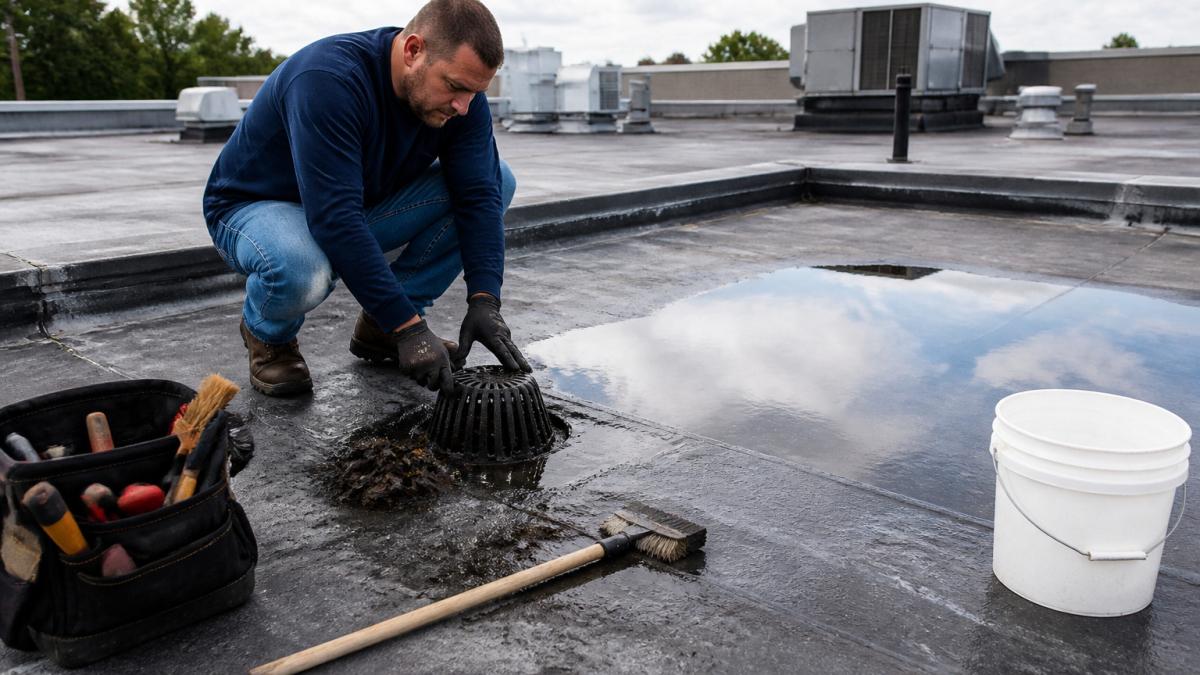
Clearing blocked outlets is the fastest fix and often solves the problem.
- Remove leaves, grit, and debris by hand, wearing gloves
- Use a plastic scoop or stiff brush to clear the drain opening
- Flush the drain with a garden hose to check that water runs freely
Do not use metal tools that can scratch or puncture the membrane.
Correct low spots and improve flat roof drainage solutions
If clearing the drains does not stop the ponding, the roof may need added slope or a new drain.
Other flat roof drainage solutions include:
- Adding a new drain or scupper in the low area
- Installing a sump or additional outlet to speed runoff
- Using tapered insulation to correct the slope over time
These fixes often need a professional. Adding a drain means cutting into the roof and connecting to the building's plumbing.
The article lists the main methods for clearing standing water and when each one applies.
| Method | Best for | Key note |
|---|---|---|
| Clear outlets and drains | Debris-blocked drains, scuppers, downspouts | Fastest fix; often solves ponding alone |
| Correct low spots | Sagging or deflected roof areas | Often needs a professional |
| Add a new drain or scupper | Persistent low areas | Requires cutting into the roof and plumbing |
| Tapered insulation | Long-term slope correction | Builds up the slope over time |
| Sump or extra outlet | Faster runoff from low areas | Speeds drainage; may need a pro |
Repair Methods by Roof Type and When to Replace Instead
The right repair depends on what the roof is made of. A fix that works on a modified bitumen roof can fail on a single-ply membrane, and using the wrong sealant or patch can void a warranty or trap moisture. Match the method to the membrane, then verify the repair actually drains.
Single-ply membranes (TPO, EPDM, PVC)
These are factory-made sheets seamed in the field. Repairs usually involve cleaning the surface, patching with a compatible membrane or cover tape, and resealing seams with the manufacturer's seam cleaner and primer.
- TPO and PVC are heat-welded. A proper patch is welded, not glued, so a peel-and-stick patch is a temporary fix at best.
- EPDM is typically bonded with contact adhesive or splice tape. Use EPDM-compatible adhesive; generic sealants often do not bond.
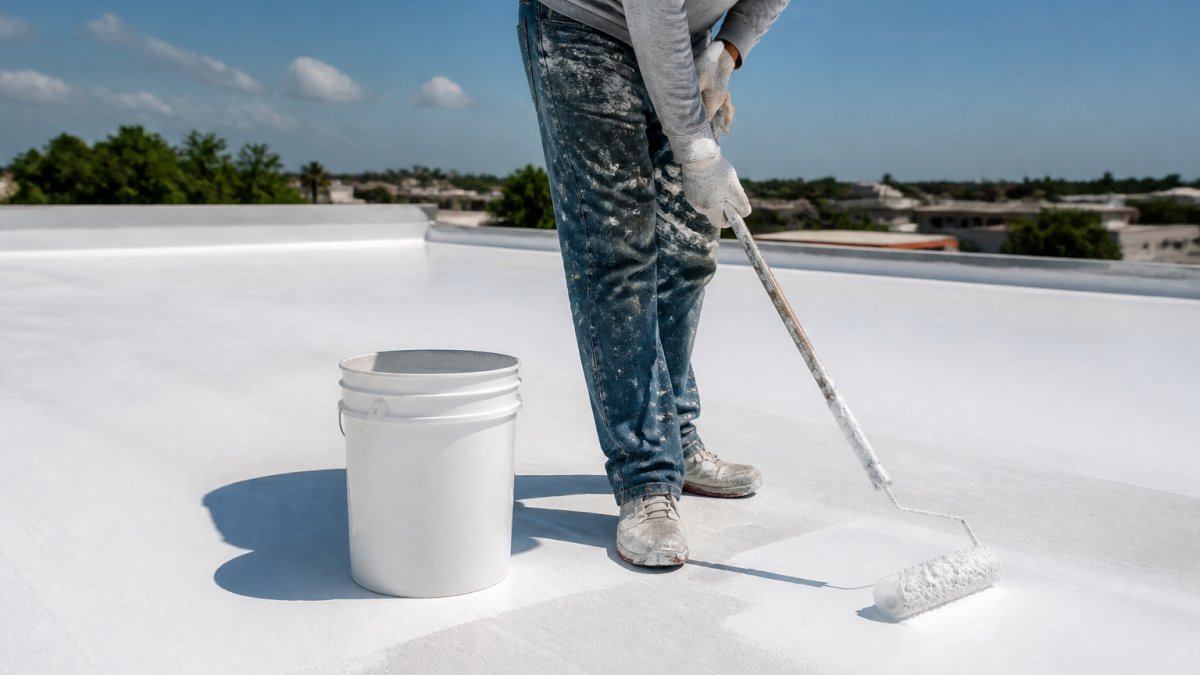
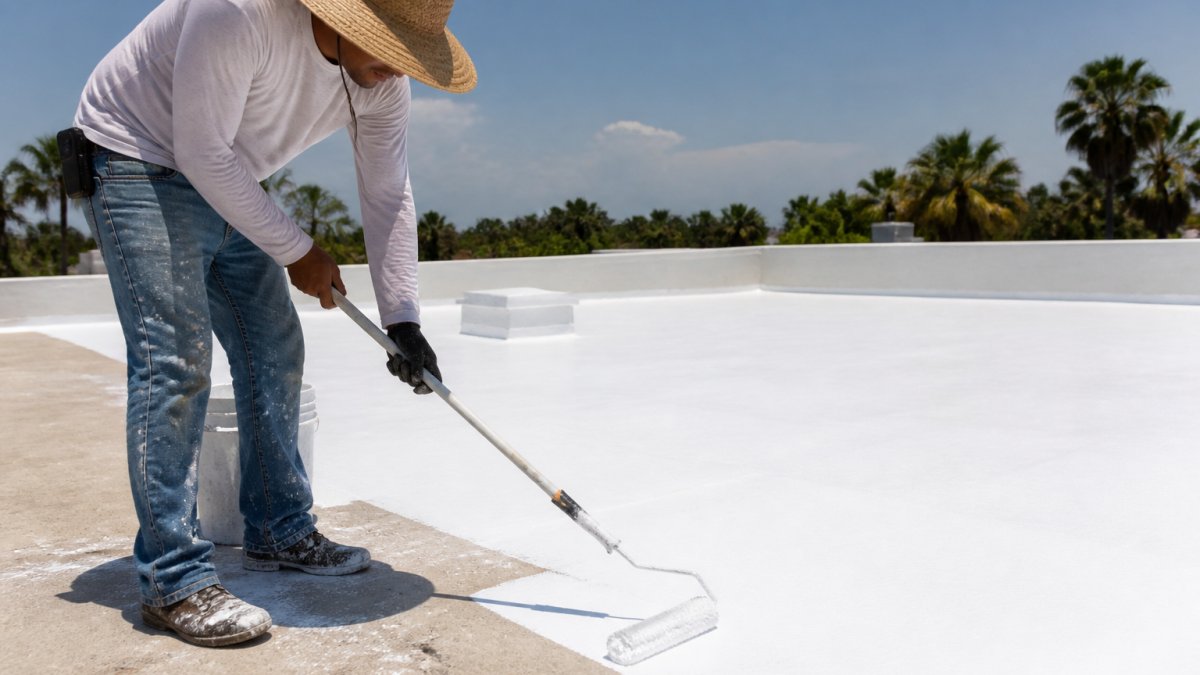
- Coatings can extend a sound membrane, but they will not bridge a wet substrate. If the insulation is saturated, coating over it traps moisture.
Modified bitumen and built-up roofs
These are layered asphalt systems. Repair blisters by cutting them open, drying the area, and patching with compatible ply and flashing cement, then sealing seams. If the flood coat is worn through in many places, replacement or a restoration system is usually more economical than repeated patching.
Metal roofs
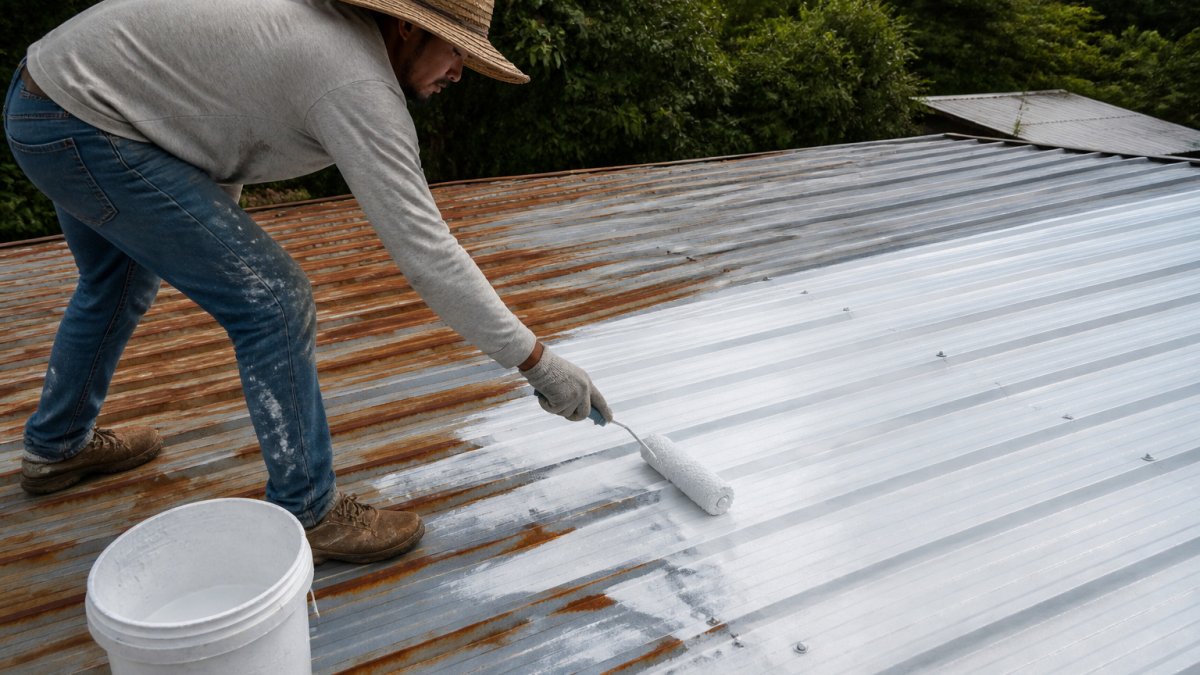
Rust spots, seams, and fastener heads should be inspected and addressed before any coating is applied. Check that ponding is not being caused by a blocked gutter or a low seam before coating.
When replacement beats repair
Replacement makes more sense when the deck is rotten or deflected, the membrane is worn through in many places, leaks keep returning after repairs, or the roof has reached the end of its service life. A roofer who inspects the roof can tell you which path fits your building. Learn why restoring a sound roof can cost far less than replacing it.
Verify the repair after the next rain
Do not assume a repair worked because the roof looks dry the day you finish. After the next steady rain, recheck the same low spots. Water should drain within 24 to 48 hours. If puddles return, the cause was not fully corrected, and you may need added slope, a new drain, or a sump rather than another patch.
Booking a Professional Assessment for Your Flat Roof
Some ponding problems are simple. Others hide structural damage, failing seams, or drainage issues that are hard to see from the ground.
Advanced Coating Services of Florida offers roof restoration, painting, and cleaning for flat, metal, tile, and asphalt shingle roofs. You can also contact Advanced Coating Services to book a flat roof assessment.
Last Updated: October 30, 2026
Frequently Asked Questions
How do you fix ponding water on a flat roof?
Start by finding the cause: a blocked drain, scupper, or downspout, or a low spot caused by slope or deflection. Clear debris from outlets first, since that solves many cases. If the water still stands after rain, the roof surface may need leveling, a new drain, or other repair. Because ponding can hide membrane damage, have a roofing professional confirm the fix and check the repaired area after the next storm.
How long can water safely sit on a flat roof?
Water should drain within roughly 48 hours after rain. Standing water that lingers longer adds weight, speeds membrane wear, and can lead to leaks at seams and fasteners. Measure the depth and area of the pooling: shallow, short-lived water is a drainage issue, while deeper or persistent water over a sagging area is a structural warning sign that calls for a professional inspection.
Can ponding water damage a flat roof?
Yes. Persistent standing water can weaken the membrane, accelerate UV and heat damage, open seams, and let moisture reach the insulation and decking. Over time it can cause leaks inside the building and rot or corrosion in the structure. Catching ponding early is far cheaper than repairing the water damage it causes.
Should I repair or replace a flat roof with ponding water?
Many ponding problems can be corrected without replacing the roof by clearing drains and correcting low spots. Replacement becomes the better option when the deck or structure is deflecting, the membrane is widely deteriorated, or the roof has repeated leaks despite repairs. A roofing professional can compare the options against the roof's age and condition.